Heavy Haul Now

Heavy Haul Now equipment intelligence

Transformer Transport

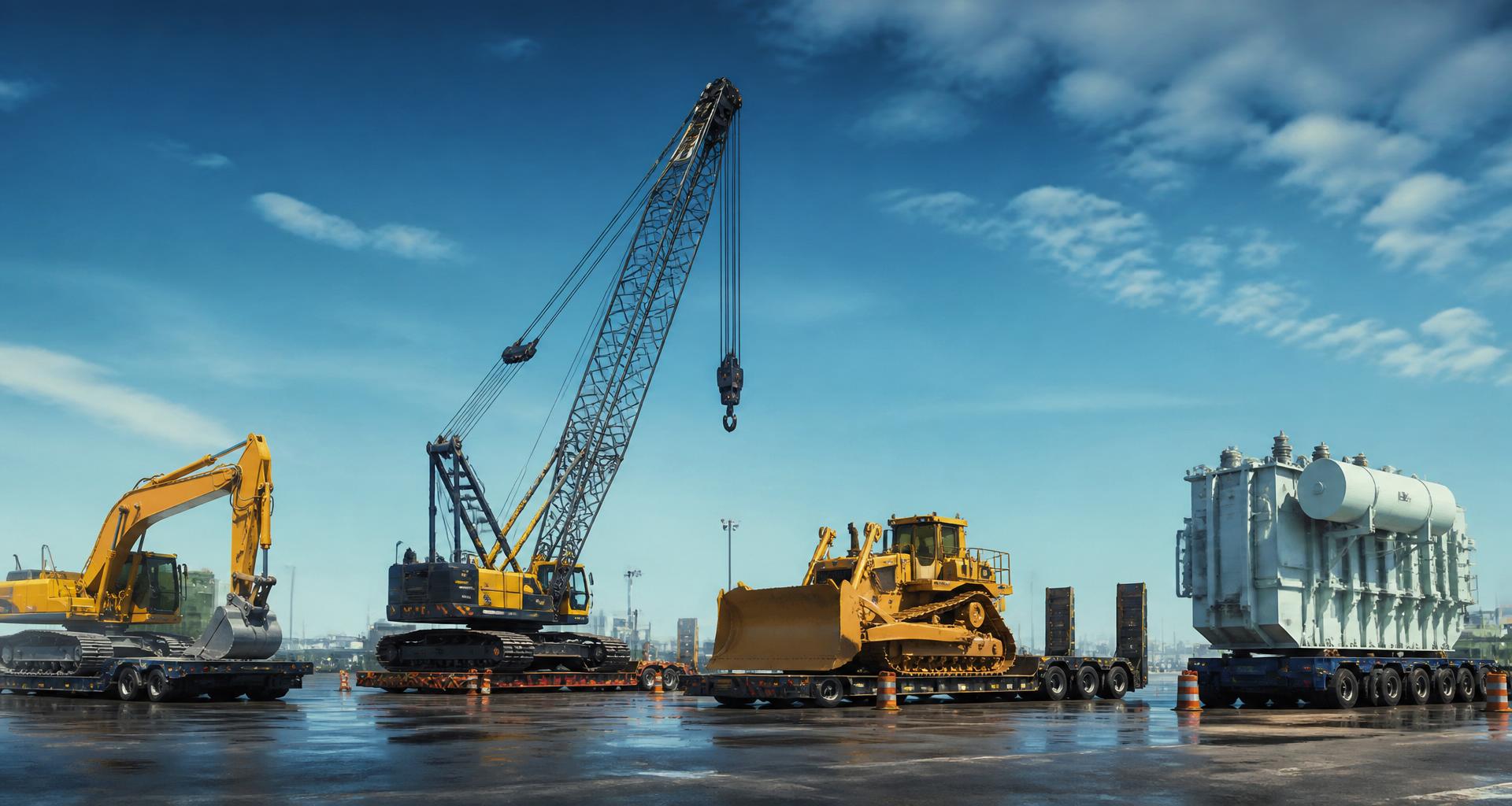
Transformer transport covers substation and distribution transformers moving from manufacturing plants to utility substations and project sites. Transformers are rigid, dense loads with a fixed center of gravity that must be matched to a trailer capable of supporting the concentrated weight, often a perimeter-frame or Schnabel-style trailer for the largest units. Verified weight, footprint dimensions, and rigging or lifting-point details must be confirmed per unit before trailer selection.

Guide type
Machine-specific
Planning
Load + route
Coverage
Nationwide
Review
Project-based

Machine-specific planning

What Shapes Transformer Transport Planning

The machine entity is the starting point. Transportation decisions depend on the actual unit, complete loaded configuration, proposed route and both facilities.

Operational facts

  • Transformers are dense, rigid loads with a fixed center of gravity requiring specific support points.
  • Large substation transformers often require a perimeter-frame or Schnabel-style trailer.
  • Rigging and lifting-point locations are typically specified by the manufacturer.
  • Oil-filled units may require draining or special handling depending on shipping requirements.
  • Superload-class transformers commonly require engineering review of the route and bridges.

Variables to verify

  • Verified weight and center of gravity for the specific unit
  • Footprint dimensions and lifting/support point locations
  • Whether the unit ships oil-filled or drained
  • Bridge and structure capacity along the planned route
  • Substation or plant access and unloading equipment available

Manufacturer and answer intelligence

Transformer Manufacturers, Model Families and Planning Answers

Manufacturer and model records help locate likely weights, transport dimensions, attachments and configuration differences. The exact serial/model configuration and current official documentation still control the shipment review.

Transformer manufacturer research and verification targets
Manufacturer research targetRecords to verifyTransport effectCanonical ownership
Siemens EnergyCurrent model specification, configuration, operating weight, dimensions and attachment recordsVerified weight and center of gravity for the specific unitManufacturer is supporting evidence for this canonical Transformer page—not a separate modifier page unless independently approved.
Hitachi EnergyCurrent model specification, configuration, operating weight, dimensions and attachment recordsFootprint dimensions and lifting/support point locationsManufacturer is supporting evidence for this canonical Transformer page—not a separate modifier page unless independently approved.
GE VernovaCurrent model specification, configuration, operating weight, dimensions and attachment recordsWhether the unit ships oil-filled or drainedManufacturer is supporting evidence for this canonical Transformer page—not a separate modifier page unless independently approved.
Prolec GECurrent model specification, configuration, operating weight, dimensions and attachment recordsBridge and structure capacity along the planned routeManufacturer is supporting evidence for this canonical Transformer page—not a separate modifier page unless independently approved.
WEGCurrent model specification, configuration, operating weight, dimensions and attachment recordsSubstation or plant access and unloading equipment availableManufacturer is supporting evidence for this canonical Transformer page—not a separate modifier page unless independently approved.
Virginia TransformerCurrent model specification, configuration, operating weight, dimensions and attachment recordsVerified weight and center of gravity for the specific unitManufacturer is supporting evidence for this canonical Transformer page—not a separate modifier page unless independently approved.

How is transformer transported?

Transformer transport covers substation and distribution transformers moving from manufacturing plants to utility substations and project sites. Transformers are rigid, dense loads with a fixed center of gravity that must be matched to a trailer capable of supporting the concentrated weight, often a perimeter-frame or Schnabel-style trailer for the largest units. Verified weight, footprint dimensions, and rigging or lifting-point details must be confirmed per unit before trailer selection.

Verify: Verified weight and center of gravity for the specific unit; Footprint dimensions and lifting/support point locations; Whether the unit ships oil-filled or drained

Which trailer is evaluated for transformer?

Transformers are typically loaded by crane onto a perimeter-frame, Schnabel, or heavy multi-axle trailer engineered to match the unit's footprint and concentrated weight at its designated support points. The manufacturer's specified lifting and support locations guide the rigging plan, and larger substation-class units may require specialized trailers capable of distributing weight across many axle lines.

Verify: Assigned trailer model, deck geometry, axle configuration and manufacturer ratings

What changes for non-running transformer?

Non-running equipment requires documented rolling, steering and braking condition, recovery or lifting points, rated loading support, deck protection and safe control at both facilities.

Verify: Condition photographs, recovery points, loading plan and site resources

What determines permits for transformer?

Superload-class transformers frequently require engineering review of bridges and structures along the route, along with permits, escorts and sometimes utility line coordination for tall loads. Route and permit scope should be confirmed jurisdiction by jurisdiction, since transformer moves often cross multiple states with differing superload processes.

Verify: Loaded dimensions, gross and axle weights, authorized route, escorts and travel windows

Specifications and cargo scope

Transformer Transport Specifications

Published ranges are planning references, not booking specifications. Verify the actual machine, attachments and transport position before trailer or permit decisions.

Weight
Verify the actual configured machine
Dimensions
Measure maximum transport length, width and height
Trailer
Select after loading and route evaluation
Pricing
Project-specific review required

Common cargo configurations

  • Distribution transformers
  • Substation power transformers
  • Large utility-scale transformers

Trailer and facility intelligence

Loading and Trailer Planning for Transformer Transport

Loading method, deck geometry and facility access must be evaluated together. A trailer category is only a starting point until the actual machine and route are reviewed.

Trailer and loading guidance

Transformers are typically loaded by crane onto a perimeter-frame, Schnabel, or heavy multi-axle trailer engineered to match the unit's footprint and concentrated weight at its designated support points. The manufacturer's specified lifting and support locations guide the rigging plan, and larger substation-class units may require specialized trailers capable of distributing weight across many axle lines.

Common origins and destinations

OriginDestination
Transformer manufacturing plantsUtility substations
PortsInland project sites
Storage yardsActive substation construction

Condition, attachments and configuration

Transformer Operating-Condition Decision Matrix

Running condition, attachments and transport position change the loading method, trailer geometry, securement, permits and receiving plan.

Machine conditionStarting loading pathEvidence required
Running and controllableDrive-on when the assigned trailer and site support itVerify steering, braking, traction, ground clearance and operator
Non-running but rollingWinch-assisted loading may be evaluatedVerify recovery points, rolling resistance, steering control and rated winch
Locked, damaged or unstableCrane, rollback, skidding or engineered transferRequire a documented lift/recovery plan and deck-protection method
Partially disassembledLoad machine and inventoried components in sequenceRecalculate every component weight, support point and loaded envelope

Distribution transformers

Confirm whether this item remains installed, changes the transport envelope, requires separate securement or moves as another load.

Substation power transformers

Confirm whether this item remains installed, changes the transport envelope, requires separate securement or moves as another load.

Large utility-scale transformers

Confirm whether this item remains installed, changes the transport envelope, requires separate securement or moves as another load.

Equipment decision table

Compare Transformer Transport Starting Paths

Use this table to organize the initial review. Final equipment, trailer, permit and route decisions remain project-specific.

Trailer options reviewed by transformer class
Transformer classTypical trailer reviewedLoading methodKey variable to verify
Distribution transformerFlatbed or step-deckCrane loadWeight and footprint
Substation power transformerMulti-axle or perimeter-frameCrane loadWeight and support points
Large superload-class unitSchnabel or specialized platformCrane load with engineeringRoute and bridge capacity

Permit, escort and route controls

Transformer Transport Route and Access Review

Permit status is based on the tractor, trailer, axles and loaded cargo together. Exact requirements vary by jurisdiction and authorized route.

Permits, escorts and routing

Superload-class transformers frequently require engineering review of bridges and structures along the route, along with permits, escorts and sometimes utility line coordination for tall loads. Route and permit scope should be confirmed jurisdiction by jurisdiction, since transformer moves often cross multiple states with differing superload processes.

Project intake checklist

  • Manufacturer, model and serial number of the transformer
  • Verified weight and center of gravity
  • Footprint dimensions and designated lifting points
  • Whether the unit ships oil-filled or drained
  • Origin and destination crane or rigging availability

Origin, destination and corridor reasoning

Transformer Route and Facility Relationships

A machine-to-trailer match is not complete until the full combination can enter the origin, use the authorized route and complete the planned delivery.

Relationship 1

Transformer manufacturing plantsUtility substations

Verify gate width, surface bearing, grades, turns, overhead obstructions, loading space, route clearances, permit conditions and receiving appointment.

Relationship 2

PortsInland project sites

Verify gate width, surface bearing, grades, turns, overhead obstructions, loading space, route clearances, permit conditions and receiving appointment.

Relationship 3

Storage yardsActive substation construction

Verify gate width, surface bearing, grades, turns, overhead obstructions, loading space, route clearances, permit conditions and receiving appointment.

Cost and schedule intelligence

What Determines Transformer Transport Cost?

A defensible estimate requires the actual machine, assigned trailer, loading support, permit scope, route feasibility and requested schedule. Generic fixed rates are not presented as confirmed prices.

Machine profile
Verified weight, length, width, height, attachments, support points and operating condition
Trailer system
Deck geometry, loading method, axle groups, availability and mobilization
Route and permits
Jurisdictions, bridges, clearances, construction, escorts, travel windows and final-mile access
Facility support
Winch, crane, forklift, rigging, staging, surface preparation and appointment controls
Schedule
Lead time, season, corridor demand, remote access and delivery sequencing

Consistent equipment workflow

How Transformer Transport Is Planned

Every equipment guide uses the same planning sequence so users can compare machine-specific requirements without relearning the page.

  1. 1

    Collect

    Confirm machine identity, condition, weight, dimensions, attachments, photographs and addresses.

  2. 2

    Plan

    Match loading, trailer, axle configuration, route, permits, escorts and facility requirements.

  3. 3

    Coordinate

    Align pickup, carrier, operators, loading support, escorts and delivery appointment.

  4. 4

    Deliver

    Follow the authorized route and complete the planned unloading and receiving process.

Machine-specific focus: Verified weight and center of gravity for the specific unit; Footprint dimensions and lifting/support point locations; Whether the unit ships oil-filled or drained.

Trust, evidence and editorial controls

Transformer Sources and Verification Method

Critical specifications are verification points. Heavy Haul Now reconciles the assigned machine and trailer against current manufacturer documentation, shipment records, jurisdiction requirements and route conditions before confirmation.

Machine identity
Make, model, serial/configuration, year, photographs and attachment inventory
Technical evidence
Current manufacturer specification or measured/certified machine records
Operational evidence
Condition, loading resources, securement points and facility access
Regulatory evidence
Jurisdiction permits, approved route, escorts, travel windows and restrictions

Last reviewed: 2026-08-01. Unverified project examples, invented prices and unsupported capacity claims are not published as completed work.

Equipment knowledge graph

Compare Transformer With Related Machine Entities

These links are selected from shared trailer, cargo and operational signals instead of repeating the same related links on every page.

CNC Machine Transport

Compare loading, trailer and route decisions through shared planning signals such as multi, equipment, loaded.

Rock Crusher Transport

Compare loading, trailer and route decisions through shared planning signals such as typically, trailer, power.

Generator Transport

Compare loading, trailer and route decisions through shared planning signals such as trailer, typically, loaded.

Crane Transport

Compare loading, trailer and route decisions through shared planning signals such as crane, multi, trailer.

Boom Lift Transport

Compare loading, trailer and route decisions through shared planning signals such as heavy, typically, trailer.

Drilling Machine Transport

Compare loading, trailer and route decisions through shared planning signals such as typically, trailer, power.

Machine-specific answers

Transformer Transport Frequently Asked Questions

Visible answers and FAQ structured data are generated from the same equipment record to maintain content parity.

What trailer is used for a large transformer?

Large substation transformers are commonly moved on multi-axle, perimeter-frame or Schnabel-style trailers engineered to match the unit's weight and support points.

Does the transformer ship oil-filled?

This depends on the unit and shipping requirements; some transformers ship oil-filled while others are drained, which should be confirmed with the manufacturer.

Is engineering review always required?

Large superload-class transformers commonly require bridge and route engineering review, while smaller distribution units may not.

How is the transformer loaded?

Transformers are typically loaded by crane at the manufacturer's designated lifting points rather than driven or winched on.

Do multiple states require separate permits?

Yes, superload-class moves that cross state lines typically require permits and route approval in each jurisdiction crossed.

What is verified before booking?

Verified weight, center of gravity, footprint dimensions and lifting-point locations are all confirmed before trailer and route selection.

Machine-specific project review

Request Transformer Transport Pricing

Send the machine, condition, weight, dimensions, attachments, exact addresses, loading method, photographs and requested dates.

Request equipment pricing