
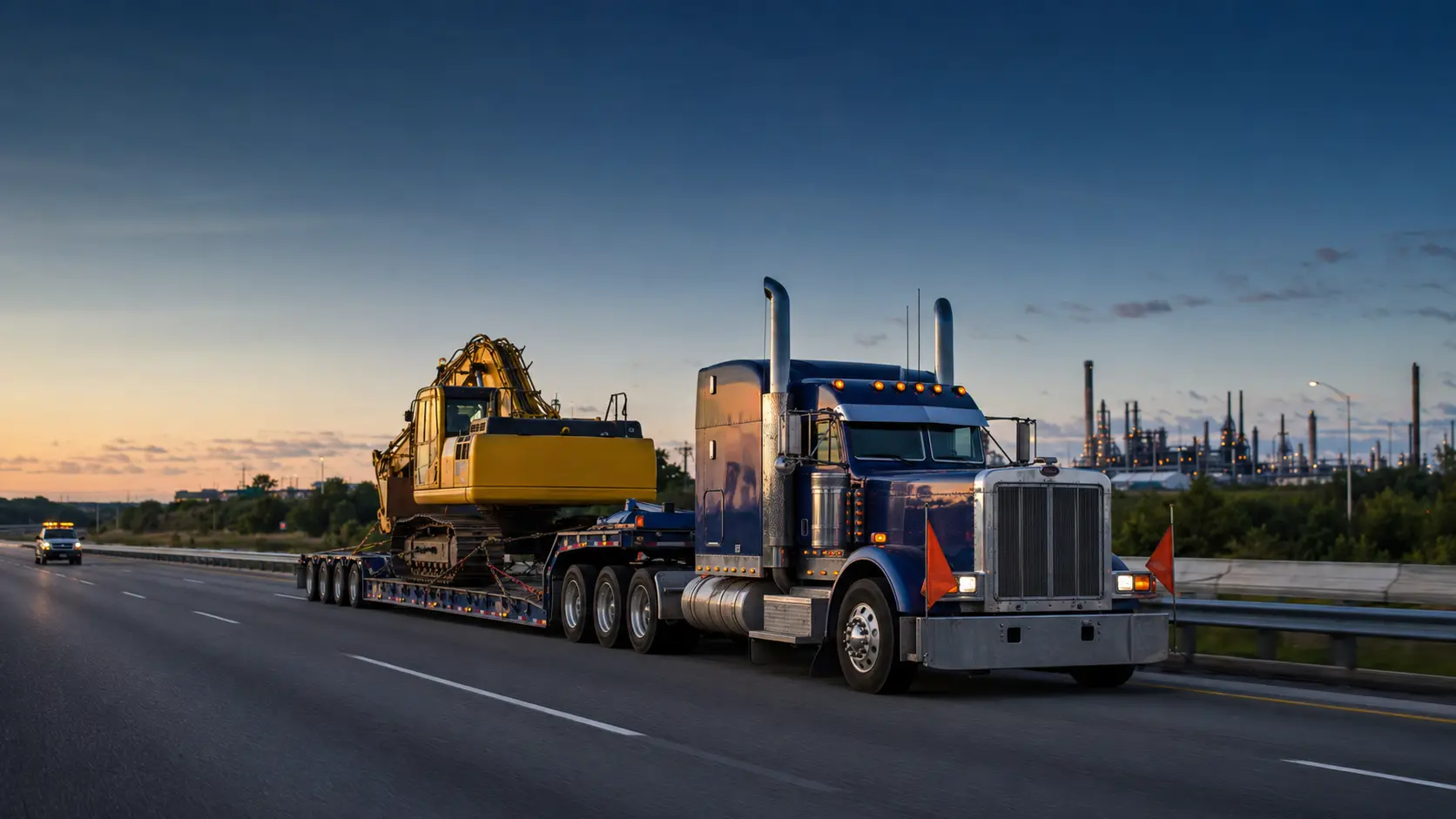
Detroit Machinery Transport Services
Specialized Heavy Freight in Detroit, MI
In Detroit, MI, heavy-haul demand is tied to automotive, batteries, and steel and the freight connections surrounding Ambassador Bridge, Gordie Howe corridor, and I-75/I-94. Representative cargo includes industrial furnaces, mill equipment, and stamping presses, although no equipment family determines the trailer by itself. Planners must confirm weight, dimensions, attachments, center of gravity when relevant, operating condition, loading support, permits, escorts, clearances and property access before a pickup date or final price can be confirmed.
Local operational evidence
What affects heavy haul planning in Detroit?
Detroit planning starts with the named freight assets, cargo profile, facility access and jurisdiction sequence shown below.
Ambassador Bridge is a named Detroit route reference; its current structures, work zones and road ownership must be checked for the proposed combination.
automotive, batteries, and steel define the local commercial context without implying unsupported shipment volume.
Industrial Furnaces is a representative Detroit cargo type whose actual model, attachments and condition control the transport profile.
RGN/Lowboy is a screening candidate only; axle distribution, deck geometry, loading and the authorized route determine final suitability.
Early planning checkpoint
Know the dimensions before choosing the trailer.
Cargo make, model, exact weight, length, width, height, condition, loading support, and both addresses determine the next step.
City-owned intelligence
Detroit industries, corridors and operating environment
Detroit's industries, freight facilities and operating conditions create distinct trailer, routing and site-access decisions.
Local industry relationships
- Automotive demand around Detroit connects industrial furnaces movements with access screening near Ambassador Bridge.
- For Detroit's batteries sector, dispatch planning begins with the actual mill equipment configuration and the facility path connected to Gordie Howe corridor.
- Steel projects are a distinct Detroit cargo context; stamping presses loads must be reconciled with the roads and facilities around I-75/I-94.
- The local robotics supply chain can generate assembly-line machinery moves, making Detroit River terminals a relevant corridor and access checkpoint rather than a generic city reference.
- Heavy Manufacturing demand around Detroit connects robotic cells movements with access screening near Ambassador Bridge.
Corridor and facility signals
- Detroit movements associated with Ambassador Bridge require a corridor-specific review of permits, lanes, intersections, overhead conflicts, staging and final-mile access.
- For loads serving batteries facilities, Gordie Howe corridor is an operating reference that must be reconciled with the actual vehicle geometry and issued permit route.
- I-75/I-94 supports steel freight in the Detroit market; verify road ownership, structures, work zones, turning geometry and authorized travel windows.
- Treat Detroit River terminals as a Detroit route-screening anchor for robotics cargo, with current clearance, bridge, construction and jurisdiction checks before dispatch.
Terrain, weather and seasonality
- Screen lake-effect snow and reduced winter visibility when scheduling a Detroit heavy haul movement; verify current conditions near the planned travel date.
- Screen freeze-thaw damage near bridges and ramps when scheduling a Detroit heavy haul movement; verify current conditions near the planned travel date.
- Screen shoreline storms and spring flooding when scheduling a Detroit heavy haul movement; verify current conditions near the planned travel date.
- Industries reviewed
- 5
- Visible sources
- 3
- Reviewed
- August 1, 2026
- Maintenance
- Quarterly corridor and source review; event-driven updates for material authority or access changes
Pickup and delivery controls
Detroit access constraints to verify
Corridor screening
Screen structures, intersections, overhead conflicts and work zones connected to Ambassador Bridge, Gordie Howe corridor, and I-75/I-94 using the final loaded height, width, length and axle plan.
Facility access
Assign responsibility for site preparation, traffic control, loading support, appointments and delivery placement in writing.
Permit ownership
Do not treat a state permit as proof of Detroit final-mile or private-property access; verify each controlling entity.
Shipment decision support
Detroit equipment and trailer starting points
This comparison supports intake. It does not replace engineering, carrier, securement, permit, or route approval.
| Cargo | Starting trailer | Local signal | Verify before dispatch |
|---|---|---|---|
| Industrial Furnaces | RGN/lowboy | Ambassador Bridge | Loaded dimensions, weight distribution, securement and route clearance |
| Mill Equipment | step deck | Gordie Howe corridor | Operating condition, loading method, facility access and permit timing |
| Stamping Presses | flatbed | I-75/I-94 | Loaded dimensions, weight distribution, securement and route clearance |
| Assembly-Line Machinery | multi-axle modular | Detroit River terminals | Operating condition, loading method, facility access and permit timing |
Transparent planning examples
Three Detroit heavy haul scenarios
These Detroit examples compare cargo, loading, trailer and access decisions without presenting hypothetical work as a completed shipment.
Planning scenario
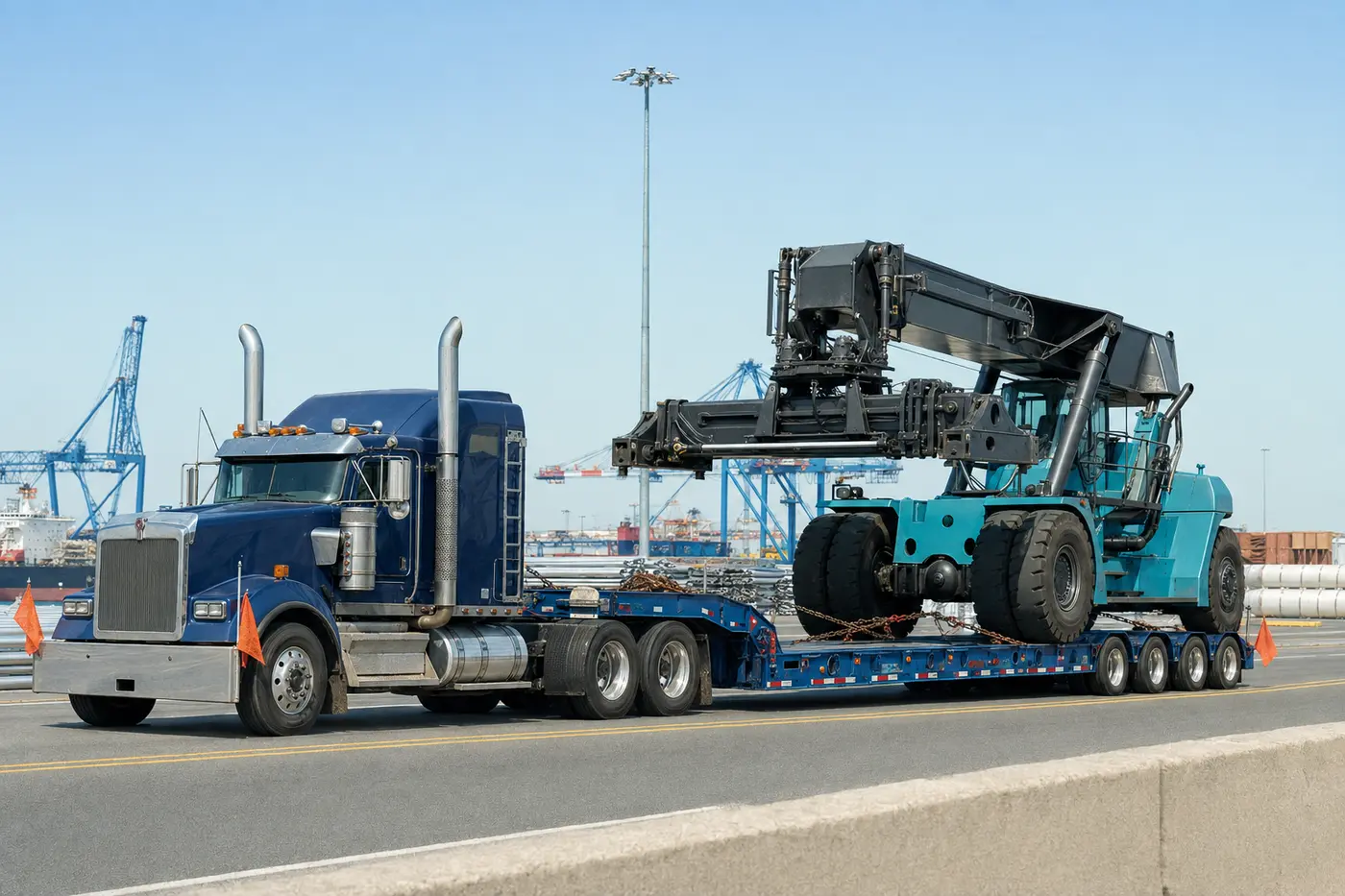
Industrial Furnaces planning scenario near Detroit
- Equipment
- Industrial Furnaces
- Example origin
- Pickup in Detroit, MI, near Ambassador Bridge
- Example destination
- Automotive project site in Michigan
- How intake starts
- The planning record begins with industrial furnaces specifications, current photographs, operating condition, site contacts and the exact addresses connected to Ambassador Bridge.
- Trailer starting point
- RGN/lowboy
- Timing
- No transit promise is made until road miles, approvals, escorts, travel windows, Ambassador Bridge constraints and both facilities are confirmed.
- Price status
- The commercial scope separates transport, approvals and accessorial work after verified facts establish the feasible movement plan.
- Outcome standard
- The planning example ends at the evidence threshold; no successful delivery, customer result or performance metric is asserted without a verified record.
Planning scenario
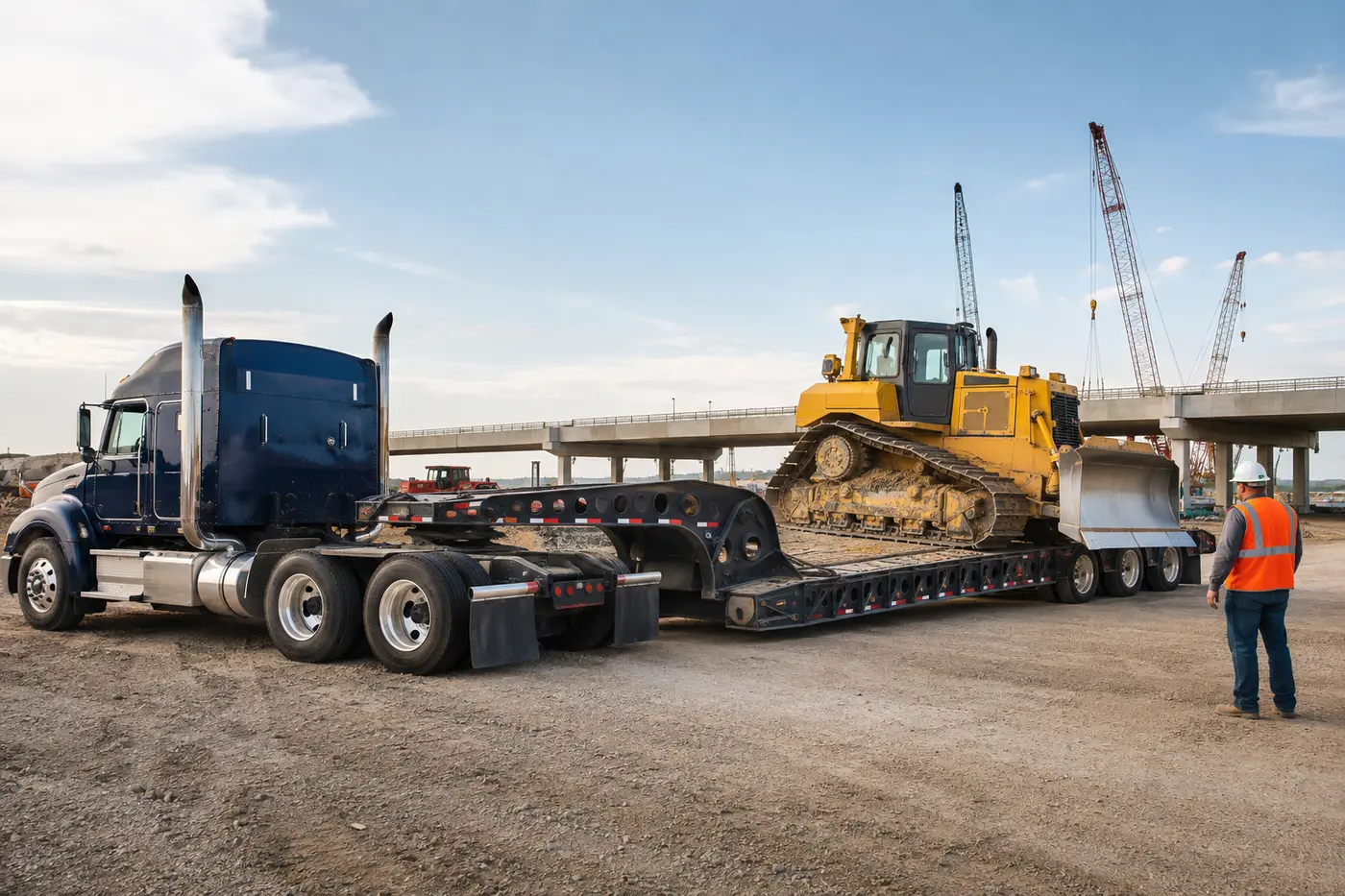
Mill Equipment planning scenario near Detroit
- Equipment
- Mill Equipment
- Example origin
- Pickup in Detroit, MI, near Gordie Howe corridor
- Example destination
- Batteries project site in Michigan
- How intake starts
- Before equipment assignment, the shipper supplies the mill equipment weight, transport dimensions, attachments, condition, loading resources and both facility contacts.
- Trailer starting point
- step deck
- Timing
- The working schedule is updated after permits, route verification, loading support and the batteries delivery window have responsible owners.
- Price status
- No example price is presented because the assigned cargo, route, schedule and facility responsibilities have not been documented as a real project.
- Outcome standard
- A real Detroit record would close with receiving acceptance, condition notes and approved evidence; this is an illustrative planning path, not a completed customer job.
Planning scenario
Stamping Presses planning scenario near Detroit
- Equipment
- Stamping Presses
- Example origin
- Pickup in Detroit, MI, near I-75/I-94
- Example destination
- Steel project site in Michigan
- How intake starts
- The intake identifies the exact stamping presses, serial or model evidence, transport position, site geometry, requested timing and the I-75/I-94 access relationship.
- Trailer starting point
- flatbed
- Timing
- Pickup is not confirmed while dimensions, route authority, third-party support or the Detroit facility plan remains unresolved.
- Price status
- Pricing is issued in writing after the stamping presses, flatbed, route work and third-party scope are defined; this scenario contains no invented rate.
- Outcome standard
- Completion would require documented delivery, exception handling and publication approval. The example does not claim that Heavy Haul Now performed this shipment.
Conversion path
Request a written Detroit heavy haul review
Send the facts once. The team can review trailer fit, route constraints, permits, escorts, loading, schedule, and price assumptions together.
- Exact equipment dimensions and weight
- Operating condition and loading method
- Complete pickup and delivery access
- Photos, dates, site contacts, and restrictions
Evidence and claim ownership
Sources, verification date, and pricing boundary
Last reviewed August 1, 2026. Sources support regulatory and roadway context; they do not prove a specific route is approved or that a carrier is available.
Michigan Department of Transportation
Michigan roadway, permit, construction, and travel-condition verification
Open official sourceFHWA Commercial Vehicle Size and Weight Program
Federal Interstate size, weight, axle, and bridge-formula context
Open official sourceFMCSA Cargo Securement Rules
Federal cargo-securement planning context
Open official sourceStructured answers
Detroit heavy haul trucking FAQ
How is heavy haul trucking planned in Detroit, MI?
For Detroit, first reconcile the assigned machine and loading method with the origin and destination. Current conditions connected to Ambassador Bridge, plus Michigan Department of Transportation and local-road requirements, determine the permitted route and schedule.
What trailer may be used to move industrial furnaces in Detroit?
A industrial furnaces move may begin with RGN/lowboy analysis, but another configuration can be required by axle distribution, height, loading condition, bridge review or the final Detroit property approach.
What determines heavy equipment transport cost in Detroit?
A planning estimate becomes a usable quote only after the industrial furnaces, Ambassador Bridge route, site access, requested dates and included third-party services are documented. Unverified example prices are excluded from this page.
Which permit authorities can affect a Detroit heavy haul move?
Michigan Department of Transportation is the statewide starting point, but the exact Detroit path can also involve city, county, toll, bridge, port or facility control. Loaded dimensions, weights, axle data and route must be verified first.
What evidence is needed for a Detroit heavy haul quote?
A useful Detroit intake includes machine identity, serial or specification evidence, measurements, weight, operating status, attachments, origin and destination geometry, loading resources, contacts and the desired automotive schedule.
Turn your Detroit load into a verified transport plan.
Share the cargo and location facts. Receive a written review path instead of an unsupported instant promise.
Verified project evidence
Detroit, MI Heavy Haul Case Studies
Published projects must document the cargo, route, loaded profile, trailer and axle configuration, loading method, permits, escorts, operating challenge, timeline and outcome. Records without evidence and publication approval are withheld.
Project record
Cargo identity, measurements, weight and customer publication approval
Transport configuration
Trailer, axle groups, loading method and securement plan
Route evidence
Origin, destination, permits, escorts and corridor constraints
Reviewed outcome
Timeline, documented result, reviewer and verification date
No project is presented as completed until every evidence field passes editorial review.