Cargo facts
Identity, condition, dimensions and weight
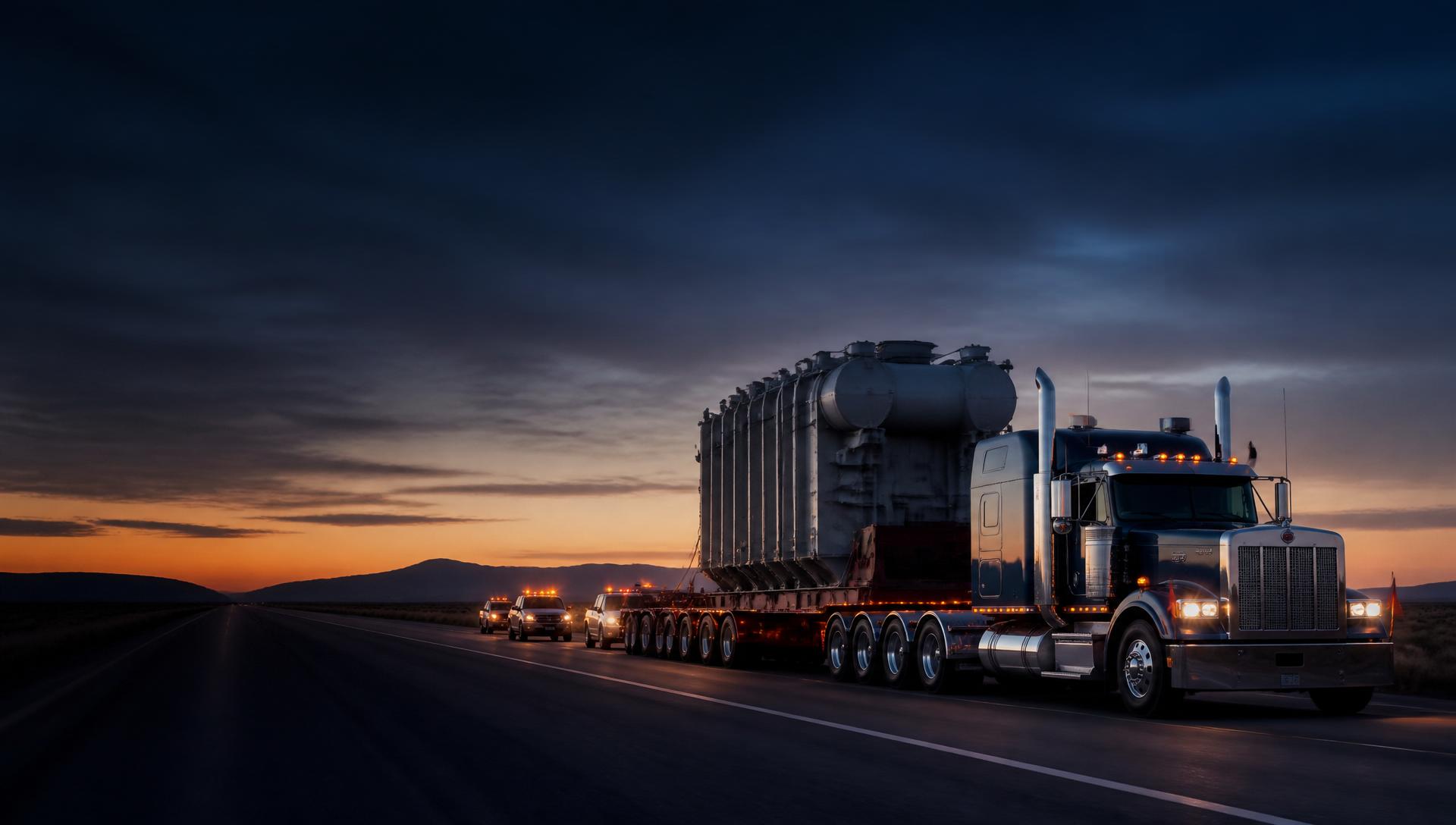
Heavy Haul Now coordinates nationwide heavy haul trucking for oversized machinery, industrial equipment, construction fleets, energy components and project cargo. Every move begins with verified cargo dimensions, weight and operating condition, followed by trailer selection, loading requirements, route feasibility, permits, escorts and final-site access. Explore equipment, trailer, industry, location, route and permit intelligence, or submit shipment details for a project-specific transport review.
Identity, condition, dimensions and weight
Loading method, trailer and axle planning
Jurisdictions, permits, escorts and clearances
Pickup, delivery and receiving requirements
Intelligence Hub Gateway
Each gateway leads to a canonical research hub instead of duplicating detailed equipment, trailer, permit, route or location information on the homepage.
Identify machine configuration, loading and transport variables.
Open hub 02Compare deck geometry, loading methods and application limits.
Open hub 03Connect cargo, facilities and recurring project logistics.
Open hub 04Review state, city, regional and final-mile considerations.
Open hub 05Explore corridors, jurisdictions and operational constraints.
Open hub 06Connect energy, port, manufacturing and construction markets.
Open hub 07Find official state guidance and jurisdiction-specific planning.
Open hubOur Services
From routine equipment moves to engineered superloads, every shipment starts with the right trailer, route and permit plan.
Specialized transport planning for over-dimensional and overweight freight nationwide.
Learn morePermit, escort and routing coordination for wide, tall and long cargo.
Learn morePurpose-matched trailers for construction, industrial and agricultural machinery.
Learn moreWhat We Move
Specialized equipment needs specialized planning. Explore common cargo categories and start a transport review.
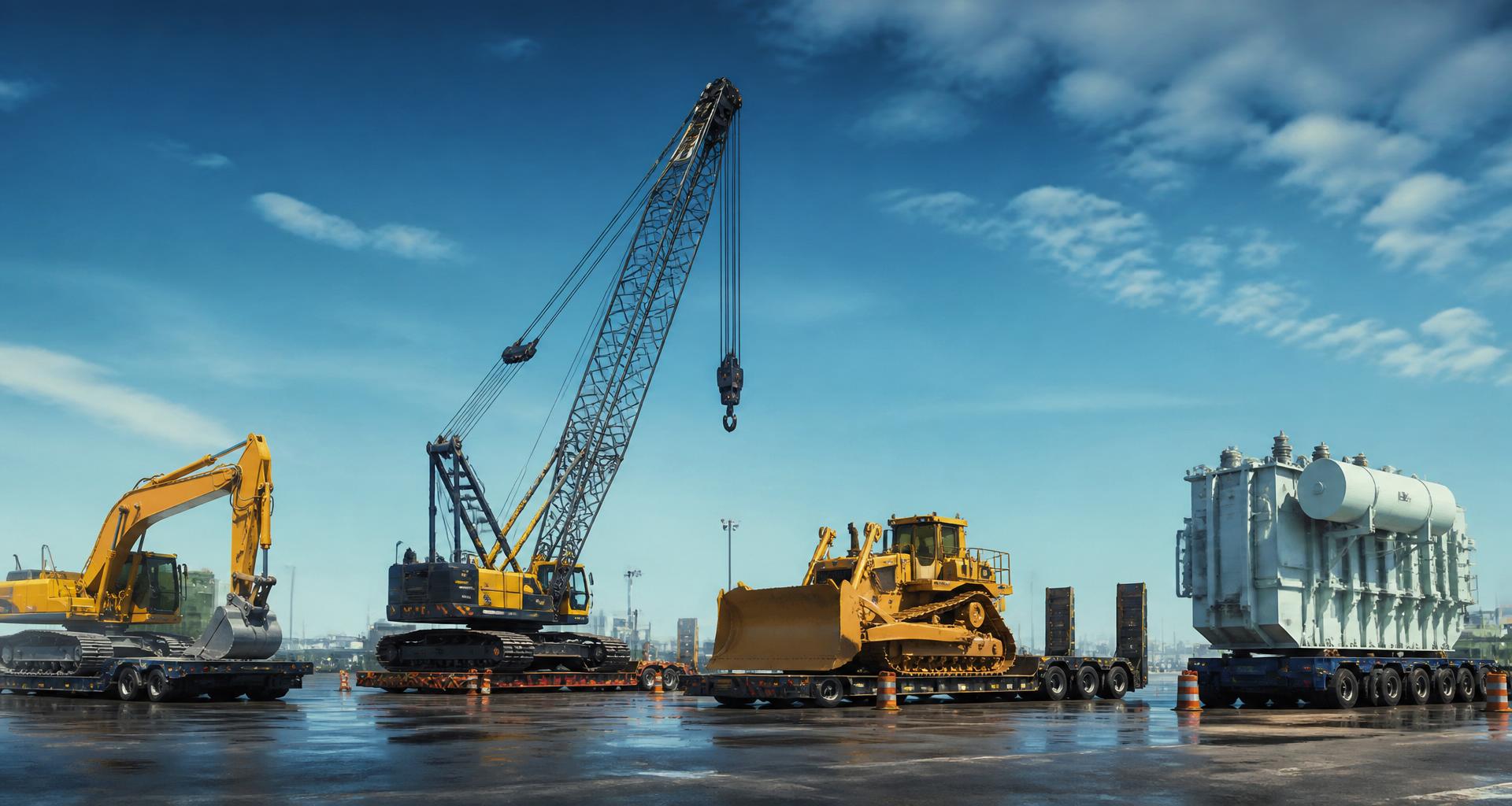
Verify boom position, attachments, track width, operating weight and loading surface.
Separate carrier, boom, counterweight and accessory loads before matching trailers and permits.
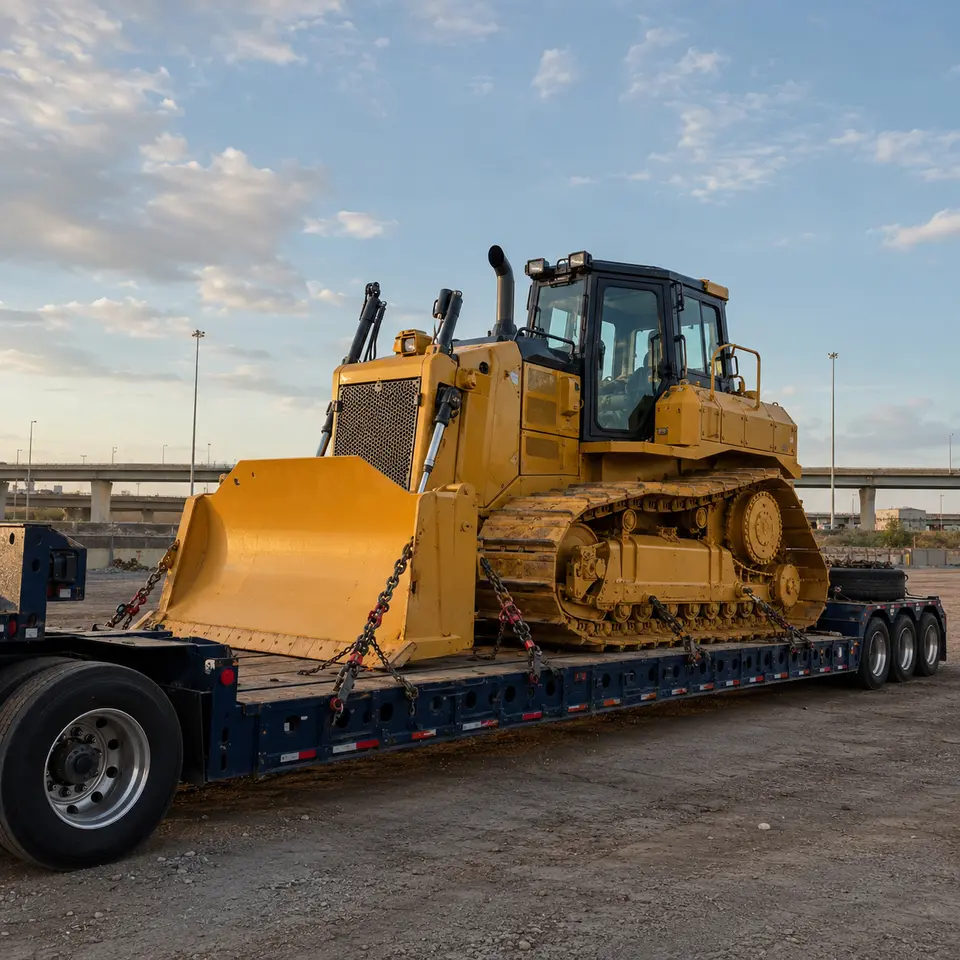
Confirm blade configuration, track width, ripper position and whether component removal is practical.
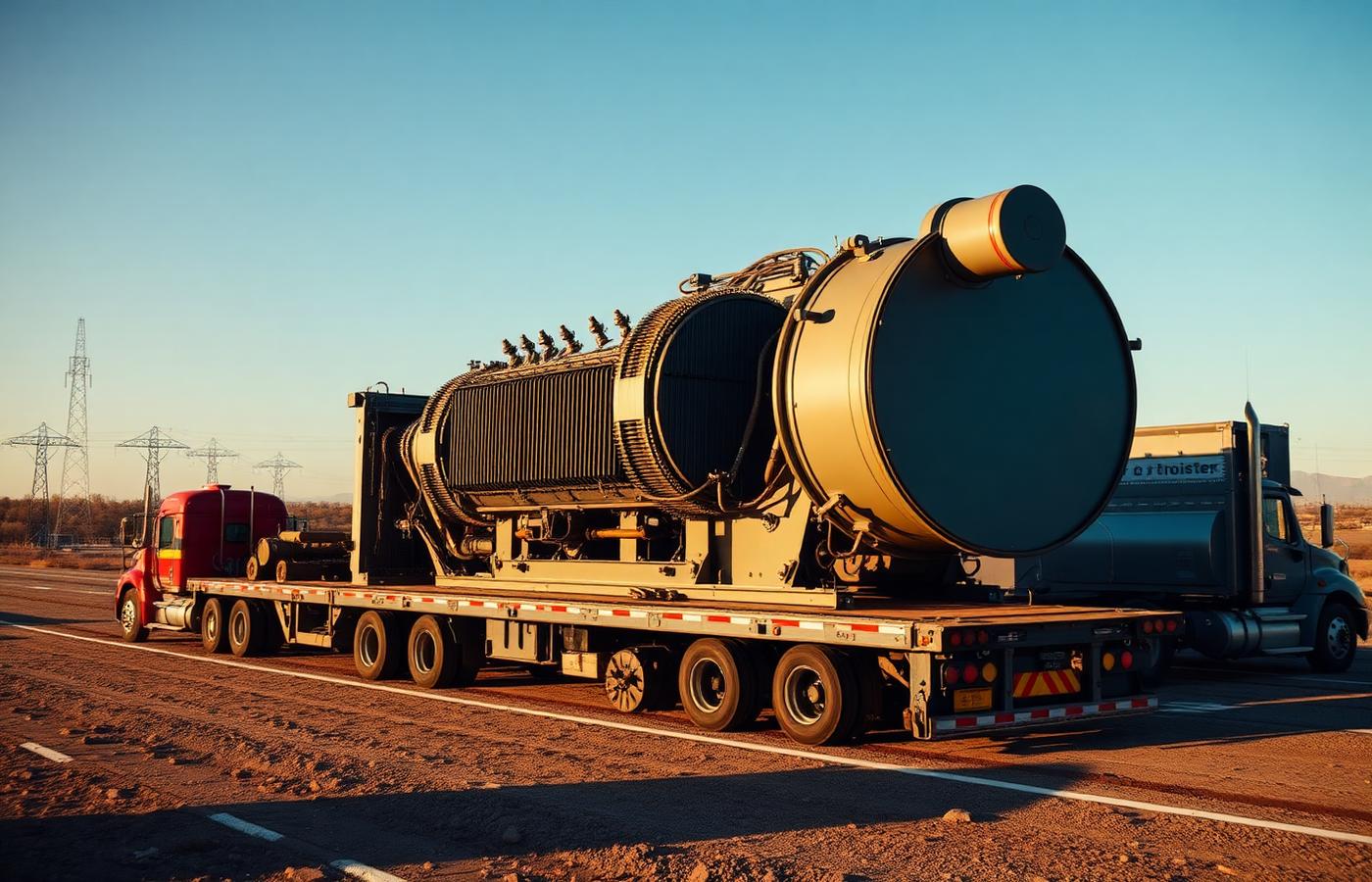
Review lifting points, center of gravity, oil status, axle distribution and site crane requirements.
Trailer Intelligence
Trailer choice depends on the actual unit, tractor, axle arrangement, jurisdiction, route and facilities. These families are starting points - not universal capacity promises.
| Trailer family | Loading advantage | Common applications | Principal limitation |
|---|---|---|---|
| Flatbed | Open side and crane access | Legal-height machinery and materials | Limited loaded-height reduction |
| Step deck | Lower main deck | Tall machinery and industrial cargo | Deck transitions affect placement |
| RGN / lowboy | Ground-level drive-on loading | Tracked and wheeled heavy equipment | Ground clearance and concentrated loading |
| Double drop | Low well between axle groups | Tall, long industrial components | Well length and loading method |
| Modular platform | Configurable axle distribution | Transformers and superloads | Engineering, assembly and route requirements |
Planning Framework
The sequence keeps cargo facts, equipment selection, route permissions and commercial scope connected.
Confirm make, model, attachments, condition and transport position.
Record loaded length, width, height, weight and center of gravity when relevant.
Check gates, surfaces, grades, turns, overhead conflicts and loading resources.
Evaluate deck geometry, axle distribution, securement and unloading method.
Review jurisdiction sequence, clearances, permits, escorts and travel windows.
Align availability, schedule, responsibilities and written pricing assumptions.
Route Intelligence
These previews identify the cargo and planning constraint. Exact mileage, approved routing and timing must be reviewed for the proposed shipment.
Oilfield and industrial equipment
Texas and Oklahoma permits must be evaluated separately.
Open route intelligenceWind-energy components
Loaded length, turning geometry and wind restrictions shape the route.
Open route intelligenceConstruction and manufacturing machinery
Multi-state permits, urban access and port appointments require coordination.
Open route intelligenceAerospace tooling and components
Configuration, weather, grades and receiving access must be verified.
Open route intelligenceIndustries Served
Heavy haul expertise for the sectors that build, power and move America.
Jobsite machines, cranes and infrastructure components
Transformers, turbines, generators and grid equipment
Skids, vessels, drilling and field equipment
Presses, production lines and industrial machinery
Combines, tractors and harvesting equipment
Haul trucks, crushers, drills and screening plants
Feller bunchers, skidders and forwarders
Breakbulk, heavy-lift and port-to-site cargo
Permit and cost intelligence
Permit, escort and travel requirements are determined by the complete loaded combination and every jurisdiction involved. Pricing likewise depends on verified cargo facts, distance, equipment, permits, escorts, route work, loading support, site access, scheduling and market availability.
National Hub Network
The hub system organizes commercially important energy centers, ports, manufacturing belts and construction markets without turning the homepage into a duplicate directory.
Transformers, turbines, generators and oilfield equipment
Explore hub network →Breakbulk, roll-on/roll-off and heavy-lift terminal connections
Explore hub network →Machinery, presses, production systems and plant access
Explore hub network →Jobsite equipment, cranes and infrastructure components
Explore hub network →Practical Resources
Direct Answers
Concise homepage answers connect visitors to the deeper resource that owns each subject.
Heavy haul trucking plans and transports cargo whose weight, dimensions, configuration or handling requirements call for specialized trailers, permits, escorts, route review or loading support. The exact scope depends on the complete loaded combination and every jurisdiction crossed.
Continue in the Heavy Haul FAQ Encyclopedia →Provide the cargo identity, make and model when applicable, operating condition, exact transport dimensions and weight, attachments, photographs, origin, destination, site restrictions, loading resources and requested schedule.
Continue in the Heavy Haul FAQ Encyclopedia →Trailer selection begins with the cargo's transport configuration and loading method. Deck height, well length, axle distribution, securement, ground clearance, tractor compatibility, site geometry and route restrictions must then be evaluated together.
Continue in the Heavy Haul FAQ Encyclopedia →A permit is generally required when the loaded combination exceeds a jurisdiction's legal limits. Requirements, thresholds, approved routes and operating conditions vary, so each state and applicable local authority must be reviewed separately.
Continue in the Heavy Haul FAQ Encyclopedia →Escort requirements depend on loaded width, height, length, weight, route, roadway type and jurisdiction. Police, utility or additional civilian escorts may apply to more complex movements. The permit authority controls the final requirements.
Continue in the Heavy Haul FAQ Encyclopedia →Yes, but the intake must identify whether the machine can steer, roll and brake and whether a winch, crane, forklift, blocking or other loading support is available at each site.
Continue in the Heavy Haul FAQ Encyclopedia →Cost is shaped by cargo dimensions and weight, distance, trailer and tractor configuration, permits, escorts, route surveys, loading support, cranes or rigging, site access, seasonal restrictions, schedule flexibility and market availability.
Continue in the Heavy Haul FAQ Encyclopedia →Lead time depends on the load and jurisdictions involved. Routine permitted moves may require less preparation than superloads, route surveys, bridge analysis, utility coordination or police escorts. Begin once reliable cargo and site information is available.
Continue in the Heavy Haul FAQ Encyclopedia →Trust, methodology and corrections
Equipment specifications are reconciled with manufacturer material when available. Permit information is reviewed against official agencies. Route and cost information is presented as planning guidance unless supported by an approved evidence record. Regulatory and operational content is reviewed on a scheduled and event-driven basis.
Editorial review: Heavy haul planning and technical content team · Last reviewed August 2, 2026
Heavy Haul Network Map
Each silo starts at its hub and drops straight into the state, metro, permit, corridor, equipment and trailer pages that support it - no dead ends, no orphaned pages.
Commercial transport paths, from standard heavy haul through superload review.
All 7 pagesState heavy haul pages feeding metro landing pages inside the same hierarchy.
Deep pages
Jurisdiction pages for oversize and overweight approvals in every state.
Deep pages
Origin-to-destination corridor intelligence with permit and clearance detail.
Machine categories and the specific equipment pages nested beneath them.
Deep pages
Trailer configurations matched to deck height, axle count and load geometry.
Deep pages
Operating-environment context for the sectors that ship oversize freight.
Deep pages
Planning guides that route readers into the reference data they need next.
Submit the equipment identity, transport configuration, origin, destination and requested schedule. Heavy Haul Now will review the likely trailer, loading, routing, permit and escort requirements before confirming availability or pricing.